


01—04
The Minds That Moved Us: Celebrating African & Diaspora Thinkers This BHM
Ibi Hollist22nd October 2026

For me, Black History Month is an opportunity to be loud and proud about our heritage and the contributions we’ve made to the world.
I also have mixed feelings about it. There is something uncomfortable about centuries of history, achievement and adversity compressed into a single month. When the effects of historical inequality are still felt today, it can feel like a small gesture in response to something much bigger.
That doesn’t make the opportunity to celebrate any less important. If anything, it reinforces why we need to keep educating ourselves, recognise overlooked contributions and create space for future generations to be seen, heard, and celebrated.
That’s partly what inspired this article. I wanted to look beyond the names we already know and discover a few people whose ideas helped shape the world we live in, whose stories deserve to be seen and heard more often.
Across Africa and its Diaspora, generations of thinkers, creators and innovators have challenged conventions, expanded possibilities and fundamentally changed how we understand the world around us.
Working in a creative and digital industry, I’m surrounded by conversations about ideas and innovation. But what fascinates me most is how universal innovation really is.
Almost everything we interact with, consume or rely on began as somebody’s idea. A thought, a question, or a different perspective. Sometimes all it takes is someone asking, “Have you thought about it this way?”
That ability to challenge what already exists and imagine something different is incredibly powerful. It drives progress, shapes industries, and, in some cases, changes the course of history.
This Black History Month, we’re celebrating remarkable individuals whose ideas have left a lasting impression, alongside new and emerging voices helping to shape what comes next.

Jamaica / United Kingdom | Cultural Studies and Media
Stuart Hall: Changing the way we understand culture
How much of what we believe about the world is shaped by the media we consume?
Born in Jamaica in 1932, Hall moved to Britain as a young man and challenged the idea that media simply reflects reality, instead exploring how meaning is created, communicated and interpreted. His work helped transform conversations about race, identity, representation and popular culture.
Discussions about diversity in media are increasingly prominent; Hall’s thinking remains incredibly relevant, making him one of the most influential figures in cultural studies. Working in Marketing, I’m perhaps more conscious of how much influence the media has on the way we see ourselves and others, but it’s something that we might not always stop to consider. Hall’s legacy is a reminder of the responsibility that comes with telling stories and why it’s so important that different voices and perspectives are represented.

United States | Mathematics and Technology
Gladys West: The mathematics behind the GPS
Think about the last time you used your phone to find a restaurant, navigate an unfamiliar city or check how long your journey would take. You probably didn’t think about the mathematics that makes this possible. That’s thanks to Gladys West.
Born in rural Virginia in 1930, West pursued mathematics and became a pioneering mathematician and computer programmer for the US Navy. Her work involved processing satellite data and developing highly accurate mathematical models of the Earth’s shape.
Those calculations contributed to the scientific foundations that made precise satellite navigation possible today.
What strikes me most about West’s story is how many of us use GPS everyday without giving it a second thought. Beyond us getting from A to B, it supports everything from delivery tracking and location-based services to the geotargeting and location reporting we use in marketing. It makes me wonder how many other contributions we take for granted, and how many brilliant minds go unrecognised.

Kenya | Environmentalism and Social Leadership
Wangari Maathai: Planting the seeds of change
Sometimes, an idea capable of transforming communities begins with something simple.
For Wangari Maathai, it was planting trees.
In 1977, she founded the Green Belt Movement in Kenya, encouraging women to plant trees to protect the environment while improving their livelihoods. Since its inception, the movement has planted more than 51 million trees and restored over 4 million hectares of land, leaving an impact across the world.
What began as a response to deforestation grew into a grassroots movement that mobilised and empowered women across Kenya. By planting trees they could earn an income, improve access to essential resources such as firewood and clean water, and play a more active role in shaping their communities.
Maathai recognised that protecting the natural world and improving people’s lives could be part of the same mission. Her work brought together environmental conservation, women’s empowerment and the fight for democracy through her advocacy for equal rights, political freedoms and greater accountability from those in power.
In 2004, she became the first African woman to receive the Nobel Peace Prize, recognised for her contribution to sustainable development, democracy and peace.
I think Maathai’s story is a beautiful reminder that you don’t always need a groundbreaking invention to make a difference. Sometimes, an idea as simple as planting a tree can change people’s lives.

Ghana / Nigeria | Art and Creative Expression
El Anatsui: Finding extraordinary possibilities in ordinary things
What happens when we challenge our assumptions about what something is worth? For internationally celebrated artist El Anatsui, discarded materials become the starting point for extraordinary creative expression.
Born in Ghana and based for much of his career in Nigeria, Anatsui is renowned for transforming everyday objects, particularly discarded bottle caps, into monumental sculptural installations.
His works often resemble flowing textiles, despite being constructed from thousands of pieces of metal. But beyond their visual impact, they create conversations about history, trade, consumption, cultural identity and transformation.
Anatsui’s approach challenges conventional ideas about artistic materials and encourages us to reconsider the potential of objects that might otherwise be overlooked.
As someone who appreciates art, I admire how he transforms discarded materials into something visually striking and meaningful, while giving them a new lease of life rather than letting them go to waste.
In a world of over-consumption and environmental challenges, his work feels more relevant than ever. As well as being a celebration of pure creativity and imagination.

United Kingdom / Nigerian heritage | Technology and Education
Anne-Marie Imafidon: Creating space for the next generation
Innovation isn’t only about developing new technology. It’s also about ensuring that more people have the opportunity to shape it. British computer scientist and mathematician Anne-Marie Imafidon has built much of her career around this belief.
As Co-Founder of Stemettes, she has championed opportunities for girls and young women to explore careers in science, technology, engineering and mathematics.
Through education, mentorship and practical experiences, Stemettes helps young people imagine themselves in industries where women have historically been underrepresented.
Her work also raises an important question: how many brilliant ideas might never be realised if talented people aren’t allowed to pursue them? By helping the next generation see new possibilities, she is contributing to a future where innovation can draw on a wider range of experiences and perspectives.
Before researching this article, I’d never heard of Anne-Marie Imafidon, and discovering her work has been one of my biggest takeaways.
What I find particularly inspiring is that her achievements are not just her own. Through Stemettes, she’s creating opportunities for countless young women and non-binary people to pursue ambitions they might never have considered possible.
There’s something incredibly powerful about that. Her influence isn’t limited to the here and now, but extends to the people she’s helping to succeed.
And to think I might never have discovered her story without writing this article!

Ethiopia / Ireland | Artificial Intelligence and Ethics
Abeba Birhane: Asking the difficult questions about AI
AI is increasingly shaping how we work, communicate and make decisions. But what happens when the technology we rely on reflects the very prejudices we’re trying to move beyond?
From AI-generated images reinforcing racial and gender stereotypes to concerns about discrimination in automated decision-making, the conversation around bias in AI is becoming increasingly important.
Ethiopian-born cognitive scientist Abeba Birhane is one of the researchers helping to lead that conversation.
In 2020, Birhane and fellow researcher Vinay Prabhu exposed racist and misogynistic labels within a major dataset used to train AI systems. Their findings contributed to MIT withdrawing its 80 million Tiny Images dataset, highlighting the consequences of building technology on biased and poorly scrutinised information.
These concerns weren’t just theoretical. Research into AI image-generation tools has found that certain models disproportionately portray white men in prestigious professions, while reinforcing racial and gender stereotypes in their depictions of different occupations.
Birhane’s work challenges the assumption that technology is inherently neutral. After all, AI systems learn from data sourced by human decisions, assumptions and existing inequalities. Her research encourages us to think more critically about innovation, considering not only what tech can achieve, but whose perspectives it represents and who might be affected by its limitations.
At a time when AI is becoming increasingly embedded in everyday life, Birhane’s contributions are helping shape important conversations about accountability, fairness and the responsibility that comes with developing powerful technologies.

One to Watch | United Kingdom | Creative Technology and Entrepreneurship
Katie Debrah: Reimagining creativity in the age of AI
Following on from the above, as AI continues to transform creative industries, an important question emerges: how can we embrace new technology without losing the creativity that makes our work distinctive? It’s a challenge that Katie Debrah is exploring through her work at the intersection of technology, advertising and creative expression.
With a background spanning music, filmmaking and digital marketing, Debrah previously worked at Google and YouTube, helping brands and artists develop creative strategies for digital platforms. She went on to establish Halo + Echo, an AI-powered creative studio combining human expertise with emerging technology to develop original content and digital campaigns.
At the heart of the business is HypeMuse, an AI-powered platform designed to help creative teams understand what makes content resonate with audiences and improve the performance of their campaigns.
Her work has already attracted industry recognition. In 2024, she was named among the BIMA 100, recognising individuals making an impact across Britain’s digital and technology industries. Halo + Echo was also selected for Digital Catapult’s 2025 Black Founders Programme, supporting innovative Black-led technology businesses.
Debrah’s approach offers an interesting perspective on the future of creativity, where artificial intelligence isn’t simply about producing more content, but about finding smarter ways to develop ideas, understand audiences and bring creative visions to life.
Speaking to Christian, our Technical Director, he agreed, “I like that this is all about using AI to understand why something works rather than churning out slop. Especially in creative work, where looking like everyone else is about the worst thing that you can present.”
Beyond Black History Month
The influence of African and Diaspora thinkers is woven into our everyday lives, often in ways we don’t immediately recognise. While their disciplines, experiences and achievements differ, each of these individuals has contributed to how we understand, experience or imagine the world around us.
Writing this article has reminded me of just how much there is to still discover and how important it is that these stories continue to be shared.
Black History Month allows us to celebrate these contributions, but recognition, education and appreciation shouldn’t be confined to October. As new generations of thinkers, creators and innovators continue to emerge, I hope we become better at recognising them and celebrating their achievements and ensuring that their ideas are given the attention they deserve.
After all, history isn’t just something we look back on. It’s something being made every day.
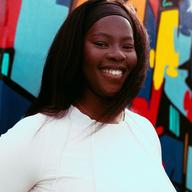

Ibi is an Account Manager at Effect Digital, looking after client relationships, proposals and reporting, with broad experience across paid social, PPC, display, CRO and SEO. A self-confessed film fanatic and foodie who imagines herself competing on MasterChef one day.


Let's build something smart, together
Partner with Effect to turn first-party data, AI and digital strategy into lasting impact.